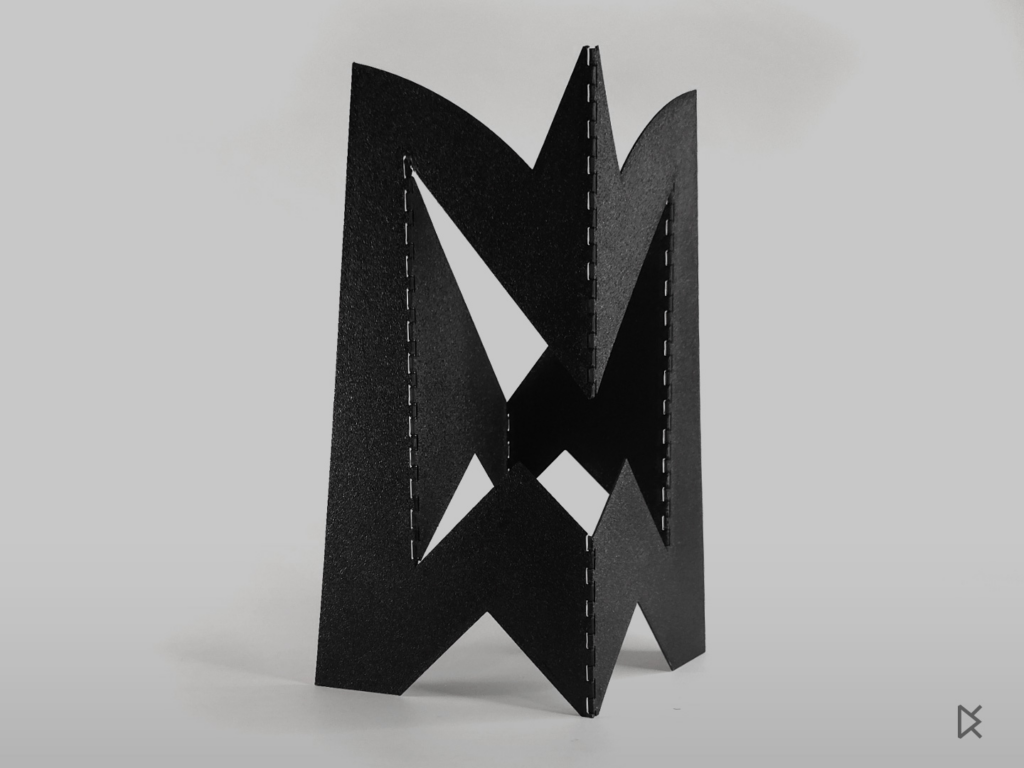
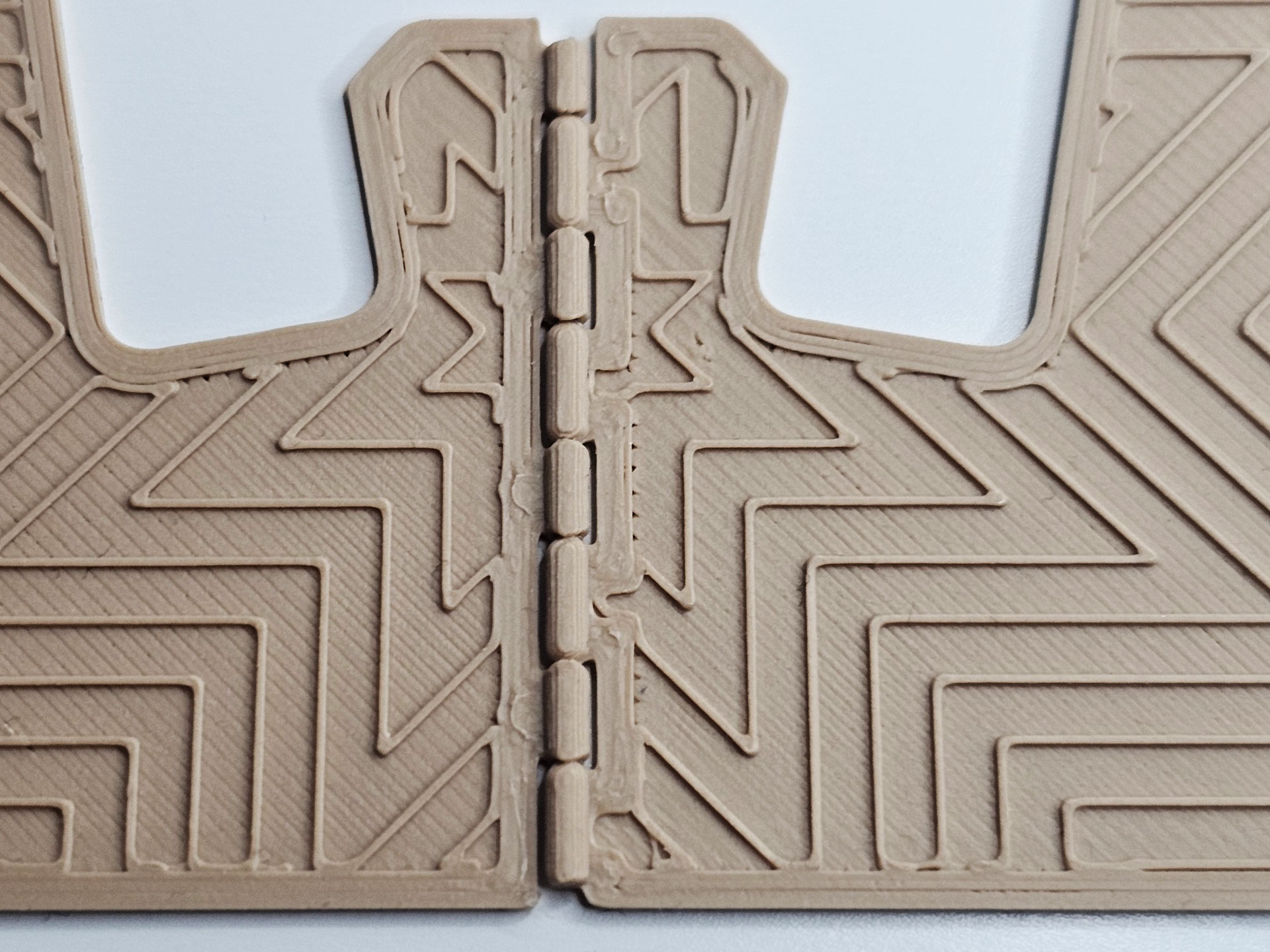
FlatHinge is a print-in-place hinge designed to be as flat as possible. Two leaves 0.8 mm thick lie on the print bed; between them runs a row of knuckles only 2 mm in diameter. The whole hinge is 2 mm thick, prints flat without supports and comes off the bed already moving. There is no pin: the knuckles hold each other through their cone-shaped ends.
The idea
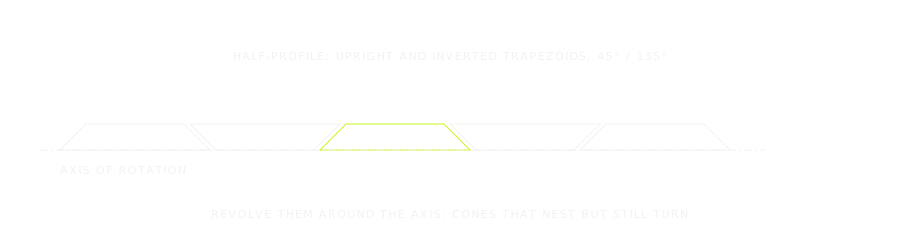
Draw a row of isosceles trapezoids along a line, alternately upright and upside down, so that the slanted side of each one runs parallel to the slanted side of the next: 45° on one, 135° on the other. Now revolve them around that line. Each upright trapezoid becomes a knuckle with a cone at both ends; each inverted one becomes a knuckle with a conical socket at both ends. The cones sit inside the sockets, so the knuckles cannot pull apart along the axis, but nothing stops them turning around it.
How it is built
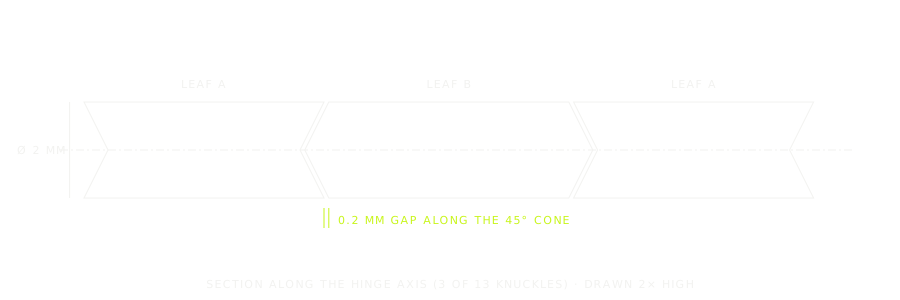
- Knuckles 2 mm in diameter and about 10 mm long, alternately joined to leaf A and leaf B.
- Cones at 45°, so every surface prints as a self-supporting overhang.
- 0.2 mm gap along each cone, so the parts print separate and turn freely.
- 0.3 mm clearance between each knuckle and the leaf it is not joined to.
- Leaves 0.8 mm thick, sitting on the bed under the axis.
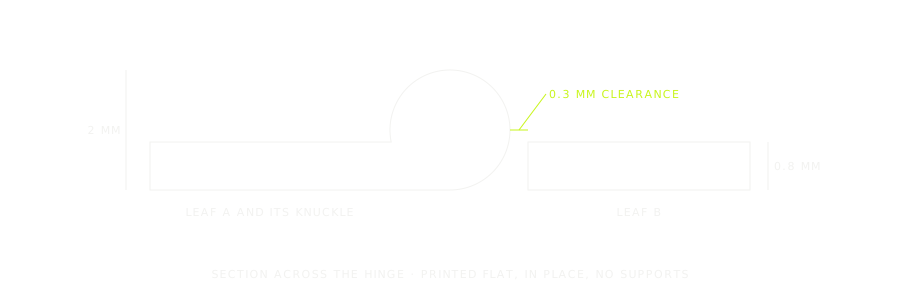
Why it is so flat
A classic print-in-place hinge needs a pin inside a sleeve, with clearance around the pin and a wall around the clearance: it quickly grows to 5 or 6 mm. FlatHinge has no sleeve. The axial load is carried by the cones, so a knuckle can be a plain 2 mm rod, and the hinge is no thicker than that rod.
Use cases
- Folding sculptures: the travel sculptures inspired by Bruno Munari, flat panels that fold into a standing form and fold back flat.
- Objects that live in a wallet: a phone holder the size of a credit card.
- Covers and flaps on thin boxes, sleeves and booklets.
- Folding stands and supports that travel flat.
- Chains of panels: screens, mobiles, wearable plates.
Thinner still: the card phone holder
The same hinge scales down. In the Card Phone Holder the knuckles are just 1.6 mm in diameter, and the whole holder is 1.6 mm thick when folded, about as thick as two credit cards. It is the size of a card, so it lives in a wallet pocket, and it opens into a three-point stand for a phone.
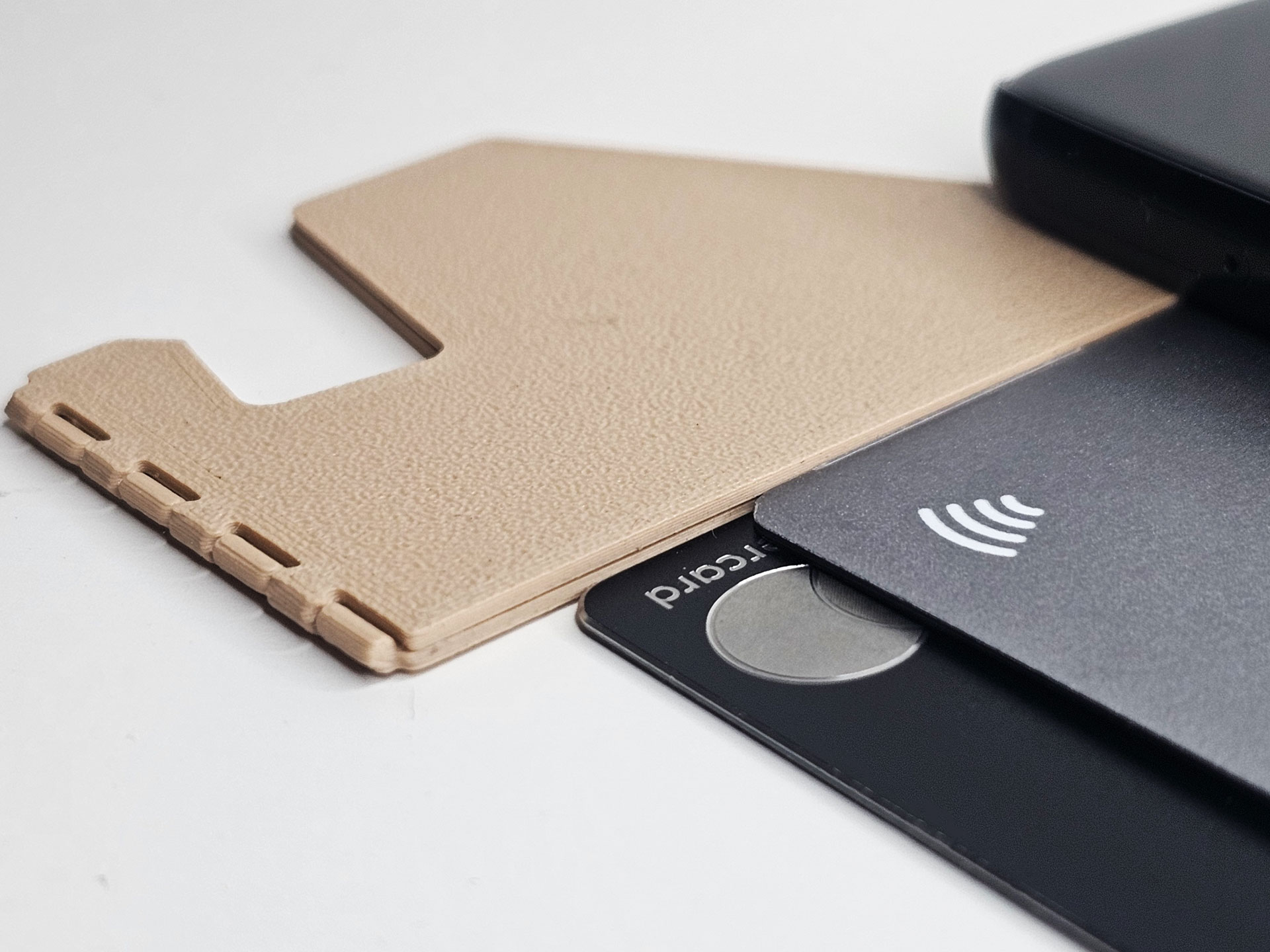
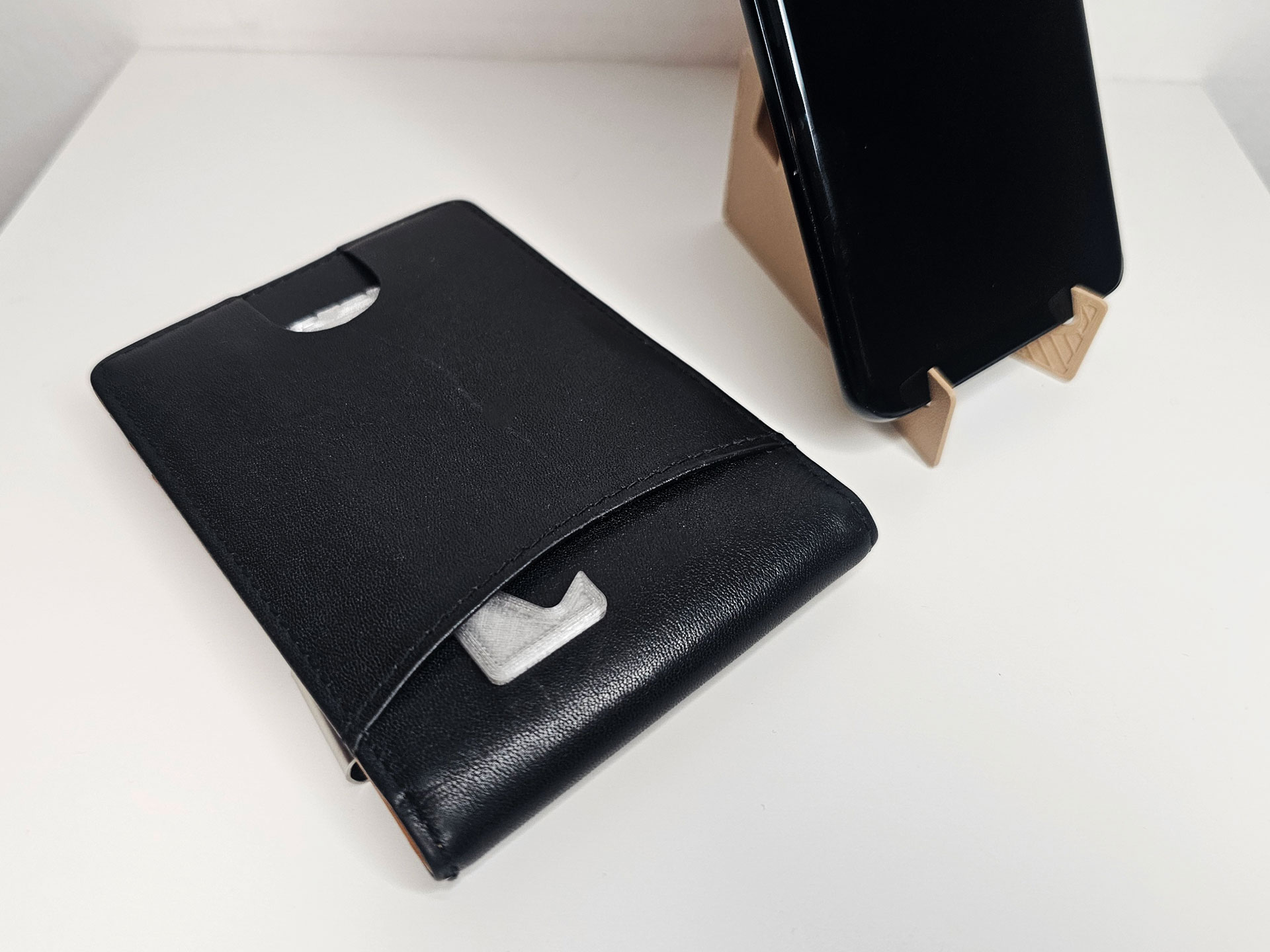
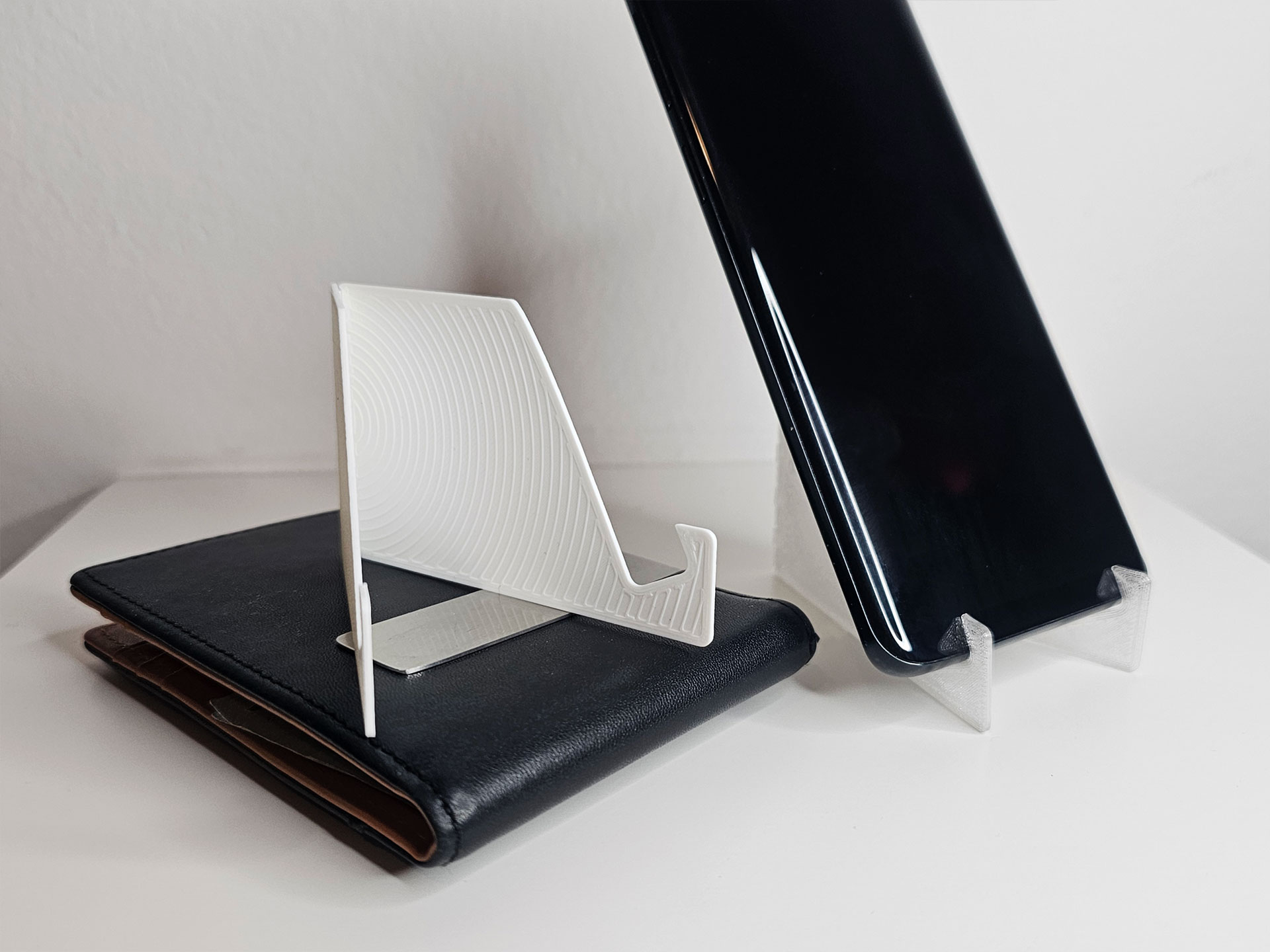
A hinge this small is also a good test of printer precision: it needs a well-calibrated machine and filament.
Printing
- Print it flat, leaves on the bed, with no supports.
- Be gentle with the first fold. If you can, fold it while it is still half attached to the bed, or on a flat surface, so the pressure is even along the whole hinge line.
- The hinge turns to about 290°: do not force it beyond.
- If a knuckle pops out of its seat, press it back in.
- Tested in several PLA filaments and in PETG; with some filaments the hinge is a little stiffer.